Data analytics and solution development
Turning data into clear business insights using analytics and automation to support better decisions, and strengthen competitive advantage

Turning data into clear business insights using analytics and automation to support better decisions, and strengthen competitive advantage

Strong data analytics and solution development, which combine advanced analytics and automation, help companies extract real value from data and build a foundation for sustainable growth.
Problem
A company was seeking to optimize its policies for commodity hedging to minimize financial risks. Based on an initial study, the company had identified potential improvement needs in its hedging approach, but methods and tools for systematically evaluating hedging efficiency were lacking.
Solution
In order to evaluate efficiency of different hedging strategies, a stochastic risk model was developed. The model simulated fluctuations of various commodity prices based on historical market performance, enabling estimation of the risks on the company EBIT, as well as the efficiency of different hedging methods in reducing risk exposure. The tool was co-developed with the company, ensuring key users’ proficiency in the model usage.
Result
The model allowed for evaluating current hedging approach, its efficiency and limitations. Consequently, further hedging approaches were identified with expected positive impact, providing means for diversifying the current risk management approaches. Resulting from the co-development approach taken with the client, the tool was handed over for future use in regularly re-evaluating the risk management policies.
Problem
The company faces challenges due to increasing competition on workforce, high turnover rate, as well as imbalance of resource supply and demand due to limited collaboration between units. For improving workforce mobility and optimizing resourcing, a new resourcing model is needed, requiring analysis of opportunities for optimization, as well as tools for resource management between units.
Solution
Opportunities for optimizing resourcing between units were analyzed, and a governance model and processes for managing resource mobility were developed. In order to enable implementation of the model a tool for coordinating resource availability and shift allocations between units was built, including an optimization algorithm for automating shift planning based on employee availability and skill requirements per task.
Result
The resourcing model was successfully implemented, allowing for coordinating employees working simultaneously in work combinations between units. A proof-of-concept version of shift optimization algorithm was developed, enabling significant reduction in manual work required for shift planning for employees.
Problem
The company faced decline in profitability due to increasing material costs. With product development mainly aiming for maximizing product performance, and limited visibility on cost implications from design choices, the company had limited control on costs.
Solution
Design-to-cost process was implemented to increase cost-consciousness and to drive material cost reductions in product development. To enable the process implementation, a tool was developed for visualizing cost structures in different products, and simulating the cost impact on changes in product development.
Result
Analysis of cost structures resulted in identification of significant cost savings opportunities in product development. Design-to-cost process was taken into use, improving cost consciousness and collaboration between R&D, procurement and product management, driving continuous cost control and implementation of the identified cost reduction initiatives.
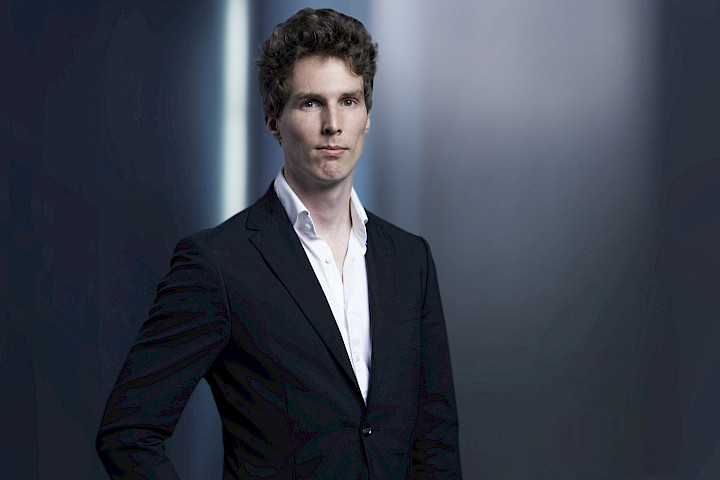
Manager with experience in strategy, operating model development and quantitative analytics. Currently leading process improvement efforts in marine and materials sectors.
Business Developer with experience in process automation, data analytics, change management and PMO. Currently working in process development and financial modeling in healthcare and hospitality industries.
Business Developer with experience in quantitative analysis and organizational transformations. Currently working on transforming organizations through data-driven decision-making.